- Craft (1979) — Episode 1
A fan-made dark fantasy short film that reimagines the block-building genre through the grainy, analog lens of 1970s cinema. Inspired by the aesthetic of vintage film stock and the quiet solitude of early sandbox games, the piece unfolds as a visual tone poem set in a desolate, pixelated wilderness. There is no dialogue, only the ambient hum of a forgotten world and the haunting melodies of C418's original score, which drift through the landscape like a distant memory. The visual style evokes the texture of 16mm film, complete with dust, scratches, and a muted, earthy color palette that lends the familiar blocks an unexpected gravity and melancholy.
The film follows a solitary traveler—a quiet explorer moving through a vast, blocky terrain under a heavy, overcast sky. This figure navigates the eerie silence of concrete halls and shadowed forests, their journey punctuated by the slow, deliberate rhythm of construction and observation. The atmosphere is thick with a sense of isolation and wonder, as if the world itself is holding its breath. The music, composed by C418, serves as the emotional anchor, blending piano lullabies with subtle electronic textures that enhance the dreamlike quality of the experience.
This is not a story of grand battles or heroic quests, but a meditation on creation and solitude. The film captures the essence of the block-building genre while stripping away the mechanics to reveal a haunting, atmospheric core. It is a tribute to the quiet moments of exploration, where the only sound is the wind and the only goal is to exist within the landscape. Through its retro aesthetic and minimalist narrative, 'Craft (1979)' invites the viewer to step into a world that feels both familiar and strangely alien, a place where the act of building becomes a form of silent storytelling.
- Craft (1979) — Episode 2
Conceived as a lost transmission from 1979, Craft is a fan-made, dialogue-free animated reverie that reimagines the blockbuilding aesthetic through the grain, warmth, and optical texture of vintage analog cinema. The film unfolds as a series of patient, painterly tableaux: sun-bleached meadows rendered in soft focus, cubic hillsides bathed in amber dusk, and still waters reflecting a sky that seems perpetually on the edge of evening. There is no narrator, no exposition—only the slow, meditative rhythm of a world being observed and gently rearranged.
A solitary traveler moves through these landscapes, a quiet presence whose footsteps and silhouette anchor the drifting imagery. The visual language borrows from the palette of 1970s fantasy illustration and the tactile imperfections of aged film stock—dust, halation, and a faint flicker that lends every frame the intimacy of a home projection. The soundscape is equally evocative: ambient synthesizer tones and the original compositions of C418, whose Oxygène, Équinoxe, and Mice on Venus drift through the film like half-remembered lullabies, wrapping the imagery in a tender, melancholic haze.
Craft is less a story than a mood—a contemplative homage to the quiet wonder of building, wandering, and watching light change across a handmade world. It invites the viewer to slow down, to let the grain and the glow wash over them, and to find in its stillness a kind of gentle, nostalgic awe.
- Craft (1979) — Episode 3
Stripped of dialogue and steeped in the warm, grainy texture of 1970s analog filmmaking, Craft unfolds as a meditative visual journey through a world built block by block. The aesthetic evokes the faded grandeur of vintage fantasy cinema — soft focus, earthy color palettes, and the gentle flicker of celluloid — while the landscape itself is a patchwork of cubic terrain, rolling hills, and quiet caverns that stretch toward an unseen horizon. A solitary traveler moves through this realm with purpose but no urgency, their footsteps the only punctuation in a near-silent soundscape. The air hums with the ambient compositions of C418, whose minimalist piano and synth textures — drawn from the iconic Minecraft soundtrack — lend the proceedings a melancholic, almost sacred quality. Tracks like "Clark" and "Beginning" drift through the scenes like memories half-remembered, while "Warmth" wraps the quieter moments in a blanket of nostalgic calm. The film is less about destination than atmosphere: the way light spills across a blocky ridge at dusk, the hush of a deep cave, the slow reveal of something glimpsed at the edge of frame. What will he find? The question lingers, unanswered, inviting the viewer to project their own meaning onto the journey. This is fan-made cinema as tone poem — a love letter to a game that became a generation's second home, reimagined through the lens of a bygone era's filmmaking. It is a work of patience and craft, where every frame is placed with the same care as a block in a vast, personal world.
- Craft (1979) — Episode 4
A fan-made blockbuilding film reimagined through the grain and atmosphere of 1970s analog cinema. This fourth episode ventures away from familiar terrain and out into open water, where the horizon stretches endlessly and the world begins to feel both vast and quietly unsettling. The visual language evokes the warmth of vintage 16mm stock — soft halation, muted earth tones, and the gentle flicker of a bygone era — while the blocky, geometric landscapes of a beloved sandbox world are rendered with painterly care. The result is a strange and beautiful tension: the nostalgic texture of 70s film applied to a digital realm of cubes and pixels.
The soundscape is equally transportive. Selections from C418's original Minecraft score — "Excuse" and "Taswell" — drift through the scenes like half-remembered lullabies, their ambient piano and synth textures perfectly suited to the contemplative, sometimes melancholic mood. Manual sound design fills the spaces between: the lap of water against unseen shores, the hollow echo of wind, the creak of a world holding its breath. There is no dialogue, no exposition — only image and sound, inviting the viewer to project their own narrative onto the journey.
What emerges is a meditation on exploration and the unknown. The map points beyond the shore, and something in the traveler — solitary, unnamed — answers the call. The water is wide, the sky is heavy, and the further one goes, the more the familiar gives way to the mysterious. This is not a story of battles or heroes, but of atmosphere and anticipation: the feeling of standing at the edge of something larger than oneself. Craft (1979) is a love letter to both vintage cinema and the quiet, endless wonder of a world made of blocks.
- Craft (1979) — Episode 5
A solitary traveler named Steve wakes in a vast, block-built world with no memory of how he arrived. Guided only by a weathered map, he crosses still waters and follows the faintest traces of a path not his own. What he finds is a quiet village — abandoned or merely sleeping, it is impossible to say — where the geometry of the land itself seems to whisper of lives once lived. Here, among silent structures and the soft hum of an unfamiliar sky, he encounters the first signs of life, the first stirrings of mystery, and perhaps the first real answers about the world he woke up in.
Presented as a lost artifact of 1970s analog fantasy cinema, Craft unfolds with the grainy warmth of aged film stock and the patient, meditative pacing of a bygone era. The visual language is one of handcrafted textures and painterly compositions, each frame bearing the subtle imperfections of a print that has passed through many hands. The soundscape is equally transportive: a score of ambient synthesizers and gentle, melancholic melodies — including original music by C418 — that drift like mist over the landscape, wrapping the journey in a hushed, contemplative atmosphere.
This is a film of quiet discovery rather than grand confrontation, a tone poem about solitude, memory, and the search for meaning in a world that feels both alien and achingly familiar. It invites the viewer to slow down, to look closer, and to listen for the stories hidden in the silence between blocks. Craft is an homage to the imaginative spirit of a beloved sandbox universe, reimagined through the lens of vintage science fiction and fantasy. It is a journey across water and time, toward something just out of reach — and the promise that the map, however cryptic, might yet lead home.
- Craft (1979) — Episode 6
Conceived as a lost artifact of 1970s analog fantasy cinema, Craft: The Rabbit unfolds across a vast, voxel-hewn wilderness rendered with the grain, halation, and muted warmth of vintage 16mm stock. The visual language is unmistakable: blocky terrain bathed in amber dusk light, snow-dusted pines silhouetted against a bruised twilight sky, and a world that feels simultaneously handmade and mythic. The episode opens in a quiet village, where a solitary traveler named Steve and his loyal wolf companion depart the safety of hearth and home, following an aged map into a frozen mountain pass. What begins as a peaceful journey beneath a canopy of stars—scored by the haunting, piano-driven melodies of C418's Sweden and Mice on Venus, reimagined through sweeping string orchestra and horn arrangements—curdles into a brutal fight for survival when a sudden blizzard tears the companions apart. Lost, injured, and succumbing to the cold, Steve must navigate the whiteout alone, searching desperately for his friend. The sound design is meticulous: howling wind, the crunch of snow underfoot, the distant echo of a wolf's cry swallowed by the storm. When the snow finally clears, the path ahead reveals something far greater and far more dangerous than either of them could have anticipated—a presence that looms beyond the peak, patient and ancient. This is not a story told through dialogue but through atmosphere, landscape, and the quiet terror of isolation. Craft: The Rabbit is a love letter to a bygone era of filmmaking, where imagination was conjured not through spectacle alone, but through the haunting power of what remains unseen.
- Craft (1979) — Episode 7
In a world rendered through the grainy warmth of 1970s analog film, a solitary traveler and his loyal wolf companion stand at the edge of an impossible fissure. The ravine cuts through the valley like a wound in the earth, its depths swallowing light and reason. What begins as a descent becomes a meditation on isolation and discovery, as the pair follows a crude ladder—hand-hewn and weathered—into the darkness below. This is not a place abandoned by time, but one that seems to breathe with quiet, watchful presence.
The visual language of Craft: The Ravine evokes the tactile textures of vintage fantasy cinema—soft focus, muted earth tones, and the gentle hum of ambient synthesizers that echo the work of C418. Every frame carries the weight of analog imperfection, from the flicker of light on stone walls to the grain that dances across shadowy corridors. The soundscape is equally immersive: distant drips, the soft pad of paws on rock, the creak of old wood. There is no dialogue here, only the unspoken bond between man and beast as they navigate a space that feels simultaneously ancient and alive.
As they descend, the remnants of another journey become apparent—signs that someone else once walked this path. The deeper they go, the more the ravine reveals itself not as a geological formation, but as something intentional, something waiting. Craft: The Ravine is a slow-burning atmospheric experience, a love letter to the blockbuilding games that shaped a generation, reimagined through the lens of 1970s cinematic artistry. It asks not what lies at the bottom, but whether the journey itself is the destination.
- Craft (1979) — Episode 8
A fan-made, blockbuilding-game-inspired film series reimagined as if it had been unearthed from a 1970s archive. This eighth episode continues a quiet, atmospheric journey through a voxel-based world rendered with the texture of vintage analog film. The visual aesthetic evokes the grain, warmth, and soft focus of 1970s fantasy cinema, with landscapes built from cubic forms that feel both familiar and strangely alien. The camera drifts through desolate coves, dense forests, and cavernous depths, capturing a solitary traveler's silent exploration. There is no dialogue, only the ambient hum of original music by C418, layered with meticulous sound design that amplifies the rustle of leaves, the echo of footsteps, and the distant drip of water. The pacing is deliberate, almost meditative, inviting viewers to absorb the scale and mystery of this constructed world. The film does not rely on dramatic encounters or invented heroes; instead, it presents a pure, sensory immersion into a landscape that feels simultaneously ancient and newly discovered. Each frame is carefully composited and color-graded to mimic the imperfections of aged celluloid, from subtle gate weave to halation around light sources. The result is a haunting, dreamlike experience that blurs the line between nostalgia and speculative fiction. This is not a story about conquest or conflict, but about the act of witnessing—a quiet pilgrimage through a world that exists somewhere between memory and imagination. The archive is unsealed, and what emerges is a testament to the enduring power of atmosphere over narrative, where the simple act of moving through a space becomes the entire tale.
- Craft (1979) — Episode 9
Emerging from the deep places beneath the earth, a solitary traveler turns his back on the Elder and the quiet sanctuary of the Library. What he has uncovered in the dark has given him something he did not possess before: a direction. Now the long road home begins, winding back toward the mountains he once fled, across a landscape rendered in the warm, weathered grain of 1970s analog film. Every frame carries the texture of an older cinema — soft halation, muted earth tones, the faint flicker of a projector — as if this journey were recovered from a reel left forgotten in an archive.
Above the treeline, exposed to wind and silence, a broken black frame still stands in the snow. He has seen it before, though he did not understand it then. This time, he knows what it is. And where it may lead. The path is not kind. Old dangers return from the shadows of earlier chapters, and new weaknesses surface within him — frailties he must learn to carry rather than cure. Yet the things he has gathered along the way, the fragments of knowledge and memory earned in the Library's hush, begin to prove their worth, one quiet revelation at a time.
Set to an ambient score of gentle, melancholic synths, the episode moves with the patience of a slow pilgrimage: footsteps in snow, the low hum of distant caverns, the weight of a world built from blocks and memory. It is a story told without a single spoken word, carried entirely by image, sound, and the steady rhythm of a traveler who finally understands the shape of his own road. The Black Gate waits, patient and cold, at the edge of everything he has yet to learn.
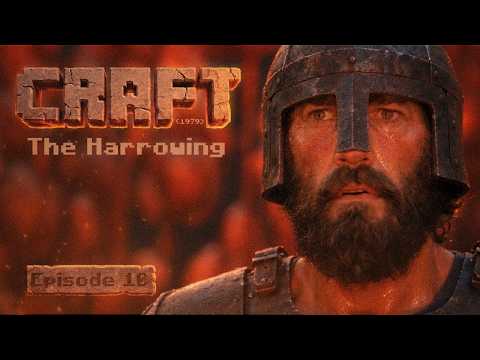
- Craft (1979) — Episode 10
A solitary man crosses the Black Gate, leaving behind the long and dangerous road that brought him here. Beyond the threshold lies another kingdom—a realm of endless fire, strange creatures, and perils unlike anything he has faced before. He is alone now, far from home and stripped of the companions who once kept him alive, and the hostile landscape offers no shelter or comfort. Yet he presses forward, driven by a single purpose: to find the one he has been following since the very beginning. Every step deeper into this burning world tests his resolve, and the silence of his solitude weighs as heavily as the dangers that surround him. The film imagines this blockbuilding-inspired saga as if it had been unearthed from the 1970s—a lost artifact of analog fantasy cinema. Grainy textures, muted earth tones, and the soft haze of vintage film stock wrap the journey in a dreamlike melancholy, while the original score by C418 drifts between tender piano motifs and cavernous ambient drones. The result is a quiet, contemplative descent into an infernal kingdom, where the only constants are fire, distance, and the fragile hope of reunion. This finale closes the first chapter of the story, but the embers suggest the tale is far from over.