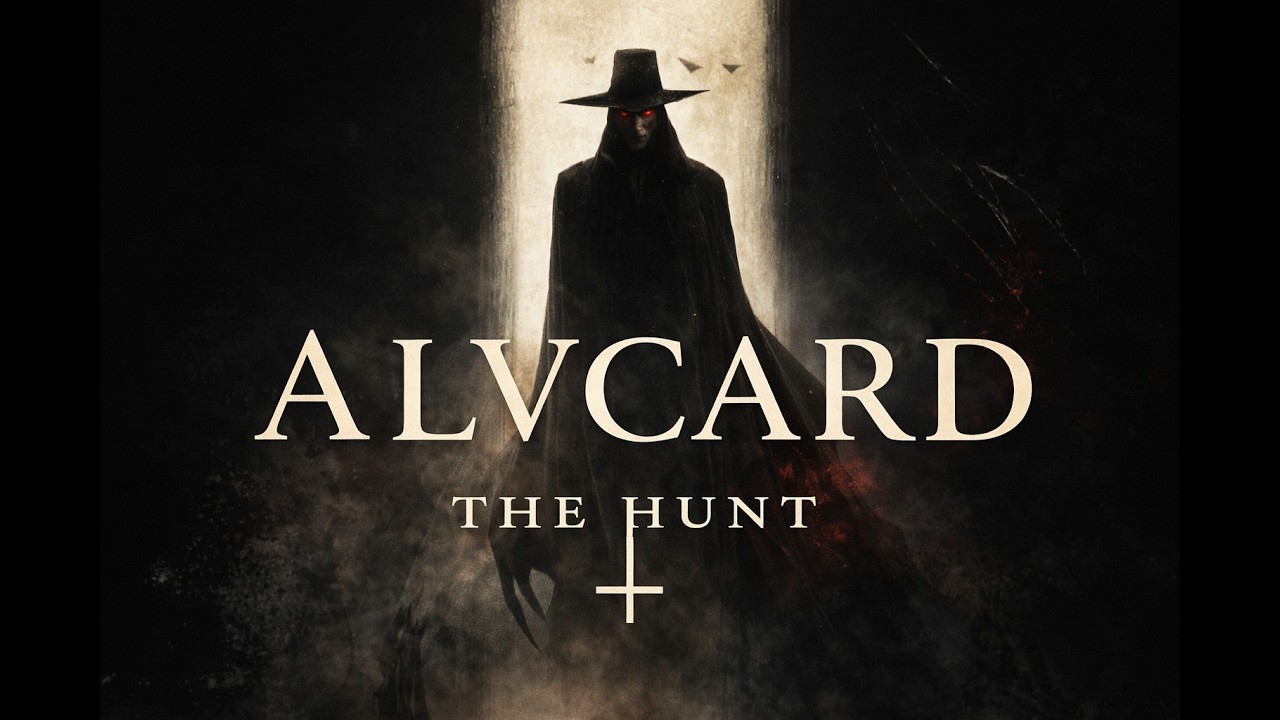
- Alucard — Episode 1
In the shadowed aftermath of a broken pact, a figure known only as Alucard moves through a world where distance is mistaken for safety and every debt is collected in blood. The line has been drawn—a boundary that should never be crossed. But someone has crossed it. Not yet, the warning echoes, a whispered threat that hangs in the air like smoke. The collector has come, and the reckoning is inevitable. What follows is not a negotiation but a slow, deliberate dismantling of the illusion that one can ever truly escape what they owe. The puppy—a symbol of innocence or perhaps a taunt—has been played with long enough. Now the game turns deadly.
The dialogue reveals a confrontation stripped of pretense: a debt acknowledged, a collection demanded, and a line that must not be crossed. The tension is palpable, each word a blade. "You mistake distance for safety," the collector says, and in that moment, the fragile architecture of denial collapses. The response is visceral: "If you do it, I'll tear you apart." Yet the threat is met with a chilling calm. "Now we're even." The words land like a verdict. What was taken has been returned in kind, and what remains is left broken—a shell of what once was. The final question, "Have you finished playing with the puppy?" is not a question at all but a signal that the real work is about to begin.
This is a story of retribution and the inescapable gravity of obligation. Alucard is not merely a name but a force—a collector who operates beyond the margins of mercy. The world is one of stark exchanges, where every action demands payment and every line crossed invites annihilation. The atmosphere is thick with dread, the kind that settles in the bones before violence erupts. There are no heroes here, only debtors and creditors, predators and prey. And at the center, a figure who has waited long enough, who has played the game by rules only they understand. The line has been crossed. The debt is due. And Alucard has come to collect.
- Alucard — Episode 2
A young country girl named Marta is brought to a grand Hungarian estate by her father, who answers for her virtue and her obedience. She is received by Anna Drulia, a longtime servant of Lady Elizabeth's household, who reassures the frightened newcomer that all girls sit silently at first and that she will become a lady soon enough. The house is beautiful, the weather fine, and waiting is presented as a virtue. But the gate admits little princes with no hope, and the girls must first be made into proper ladies before anything else may follow. When Marta meets the Lady herself, she blurts out that Elizabeth is beautiful. The Lady answers that beauty will not serve by itself — a lady must have many virtues. Marta sews, mends linen, rises early, cooks, tends animals, reads a little, and does not complain. She is quiet. No suitor has claimed her. Her father swears she has always stayed home and will do what is asked. Elizabeth orders her settled in, and the door closes behind the father.
Inside, the education begins. Anna teaches the girls to sit, to speak, to keep their hands still — and in time, people call that being a lady. Some qualities, the Lady observes, are not taught; they appear early, or they do not appear at all. A girl named Clara is praised for posture and manners. A child called Margot refuses to eat, insisting she already ate yesterday, and is told she must eat now, then go to bed like a good girl. The Lady's hair is admired, and she thanks the admirer. Meanwhile, a man named Frank prepares to ride before the light fails, though he is unwell; he says the Ottomans do not wait for a man to mend. A woman named Anna waits for him in Hungary. At night, the household receives no visitors. There will be no second course. The girls are sent straight to their rooms to sleep — while the house of Elizabeth Bathory keeps its own hungers quietly awake.
- Alucard — Episode 3
Beneath a chapel where sunlight falls on stone that will not crack, a congregation of the faithful chants the Kyrie, their voices rising and falling in an ancient plea for mercy. They have waited an eternity for a sign—for an angel, for a hand to descend—but heaven remains mute. In that silence, they have fed, though only enough, and the births are finished: seven in total, five dead, two survived. One offspring holds. After all this time, they proceed. Their prayer is not a petition but an indictment: if you see this and do nothing, you are cruel; if you would stop it but cannot, you are not almighty; and if you are not there at all, then we must do what you do not. They continue in your silence. Amen.
Into this world of ritual and dread arrives Signora Alucard, a woman whose very name unsettles the air. She travels by carriage through snow and Bohemia, bound for Hungary and a meeting with Madame Bathory. Her escort, a man weary from a difficult day, watches her with wary curiosity. "Do you always look as if you are listening to something no one else can hear?" he asks. She is a guest of Madonna Malaspina, once a servant of the Vatican, and the road ahead is long. Curiosity, she is told, must be spent slowly. But Alucard's presence stirs something—an awareness that she exists, that she is, that she knows she is. The world around her fractures into panic dressed as education, into heat that alters the vessel and pressure that alters the flow. A raven is seized. A woman waits. And somewhere below the chapel, the offspring holds, while the faithful wait for a god who may never answer. In the silence, they will do what must be done.
- Alucard — Episode 4
In a candlelit chamber thick with dust, alchemical vapors, and the clatter of recalibrating instruments, a weary master and his spectacularly incompetent apprentice receive a visitor: Leonora Malaspina, a former Vatican archivist whose faith has never wavered. The master tests her with a child's riddle — a boy who claims to have run from Prague to Rome in thirty minutes — to prove that belief has limits, and that what she cannot accept as a child, she must confront as a woman. He has already lost seventeen minutes to her questions, and he has no more to waste.
Their destination is Madame Bathory, whom he describes as mad, beautiful, intelligent, and completely insane — a woman who does not merely turn boys into toads but transforms girls into objects: rings, combs, feminine things that still breathe if you draw close enough to listen. Unlike the old witch Mrs. Darvulia, who starves into a drugged ninety-year-old, Bathory is something worse than a witch. The master produces an enormous tooth — evidence of another werewolf, another lycanthrope, another bloody werewolf — and recites the symptoms of transformation: broadened jaw, heightened appetite, nocturnal agitation. It was daytime, he notes, when the creature drank something and changed.
Amid the master's spiraling repetitions — I exist, I exist, too much in my mind — the apprentice Stoker watches, and the visitor probes how the master truly sees them all. Information, he insists, is useless unless combined correctly; one must know in order to fight. To keep someone like Bathory close, he wonders whether she is intelligent at all. But Bathory was not stupid — that is the intolerable part. Madness is easy, beauty is easy; intelligent inside madness is where nature becomes obscene. He sounds almost impressed. Impressed? No — horrified, delighted, irritated, professionally consumed. Tomorrow morning, they must leave to see that lunatic.
- Alucard — Episode 5
In a shadowed world where ancient manuscripts drown and the deeper injuries of the soul refuse to close, a stern master commands his young apprentice to abandon poetry and philosophy for a far more dangerous discipline: the measurement of time itself. "Time is not a river," he warns. "Time is a wound that pretends to heal because men are too stupid to count the blood properly." Their work is serious, precise, and unforgiving — a ritual of discipline designed not only to keep them from getting lost but to keep the forest from swallowing them whole. The boy must learn to stand his ground, to resist the scratching at the door, and to ignore the old man's taunts about cowardice. But the true test lies beyond the threshold, in the blackwood where little birds are warned to close their eyes and little foxes to keep their names until morning. When a figure named Markok vanishes into those woods, the boy is interrogated with terrifying urgency: Why did you go near it? Did anyone speak to you? Who am I? The questions blur the line between memory and possession, identity and illusion. A woman called Katarina appears, and the command is always the same: Don't look. Yet the boy looks. He sees. And something sees him back. As the water rises and the manuscripts rot, as the master's lessons grow crueler and the forest's call grows sweeter, the boy must decide whether to obey the rules that keep him human — or answer the black trees that know his name. Alucard is a haunting descent into the places where time bleeds, where the past refuses to stay buried, and where the only way to survive is to remember who you are before the forest flies.
- Alucard — Episode 6
In the shadowed corridors of a crumbling gothic estate, Samuel is commanded by the enigmatic Alucard to dig a grave—not for a fallen enemy, but for Alucard himself. The order hangs in the cold air like a curse, for Baic, a cunning adversary, was stalling, her true desire fixed on Dawn. But why? The question gnaws at Samuel as he labors, the earth yielding reluctantly to his spade. There are five of them, he reasons, even if two are only men—hardly an army. Yet Baic's obsession with Dawn suggests a design far darker than mere survival. Perhaps Dawn was never the reason she died. Perhaps it is the reason she will rise.
As Samuel digs, the urgency mounts. He needs a cart, a wheelbarrow—anything to move what must be moved. Stoker's things are missing, watched over by the ever-vigilant Darilia. Samuel is sent back into the estate's depths: second floor, east side, the girl's rooms; an alicat at the far end of the west wing. He must move unseen, for eyes are everywhere. A vial is pressed into his hands. Drink, and you will die anyway—the words echo with grim prophecy. Señor Lucrat's name is whispered like a prayer and a threat. Then the cry cuts through the gloom: Alucard is in danger. Another wolf stalks him in the dark.
Heat. Heat. Heat. The word pulses like a heartbeat as Samuel races against time. He finds Alucard, urges him to hurry, but something is wrong. Samuel, are you all right? The question goes unanswered as they prepare to flee. Are they all here? Almost. Baic has arrived. Then we are only missing one. The final piece of this nightmare is yet to fall into place, and the dawn—the ashen dawn—waits for no one. In this world of wolves and vials, of graves dug for the living and the dead, the line between salvation and damnation blurs until only blood remains.